The Sun writer, Finn Cohen sits down with Phyllis Johnson BD Imports founder in Atlanta Georgia over a cup of coffee for more than three hours to discuss coffee. They laughed about having similar childhood behaviors to how Phyllis found herself as a coffee importer working closely with coffee farmers around the world.

When I was a teenager, I flew from North Carolina to Seattle, Washington, with my grandparents to visit one of my uncles. The Pacific Northwest might as well have been a different planet, with its Douglas fir trees, mild summer weather, and snow-capped mountains looming in the distance. But perhaps the most revelatory part of the trip was when my uncle took me to a place called Starbucks and ordered me a concoction of coffee and milk that blew my mind. Up until that point, coffee to me was something that grown-ups drank—a foul-smelling liquid that for some reason they needed first thing in the morning. But the flavors I was tasting in Seattle were deep and unexpected, and then there were the obvious benefits of combining caffeine with sugar. Why don’t we have these back home? I thought.
That was in 1991. Clearly I had no inkling of what was to come. But that latte set me on a path I’ve followed ever since, chasing the same surprise and wonder. (One could argue it’s also the behavior of an addict, since caffeine is involved.) I’ve worked at a coffee shop and experimented with multiple brewing methods: basic drip, French press, pour over, and Aero Press. I travel with my own hand grinder, beans, and kettle. I’ve taken a sip of gas station drip brew and immediately thrown it out. I am a hopeless coffee snob. Until a few years ago, however, I hadn’t spent a lot of time thinking about what it takes for those beans to get into my cup, and who benefits.
Phyllis Johnson grew up far from Seattle, on a small farm in central Arkansas, but as an adult with a career in microbiology she started asking similar questions about coffee, and the lessons of her childhood informed that curiosity. In 1999 Johnson was traveling around the country selling specialty chemicals when she saw a huge bag of green, unroasted coffee beans in a customer’s place of business. She remembers thinking: Why is this sight so foreign to me as a person who lives in a country where we consume coffee at a high level? It opened a door that eventually led to her becoming a coffee importer. For several years she carried two suitcases around—one for her day job in chemical sales, and one for when she visited roasters at the end of the day. Eventually she turned her small company, BD Imports, into a full-time job, joined by her husband.
Aside from the risks of starting a business, there were other challenges. There was little precedent at the time for a Black woman in the world of coffee importing, and there was also not much focus in the US on coffees produced in Africa. Johnson traveled to Kenya, where she was often met with questions like Whose wife are you? “East Africa was colonized by European countries, and they were used to those connections coming from those spaces,” she says. “So here I am, a Black American woman talking about buying their coffee and getting all these biases toward me: ‘Are you really the buyer?’”
The roots of those biases, and of the global coffee industry in general, spring from the colonial era. Nearly all the places in the world that grow coffee—including Rwanda, Ethiopia, Kenya, Vietnam, Indonesia, Brazil, and Mexico—have a history of being conquered and oppressed by a foreign power. In some of the African countries Johnson has visited, she has spoken to people who were once forced to grow and harvest coffee. While the specifics of those exchanges may be different now, an extractive dynamic still exists between these countries and the major powers that bring coffee to other parts of the world. BD Imports has worked closely with Black Brazilian farmers and producers, and in 2020 Johnson founded the Coffee Coalition for Racial Equity, a nonprofit that aims to empower more Black Americans in the coffee industry.
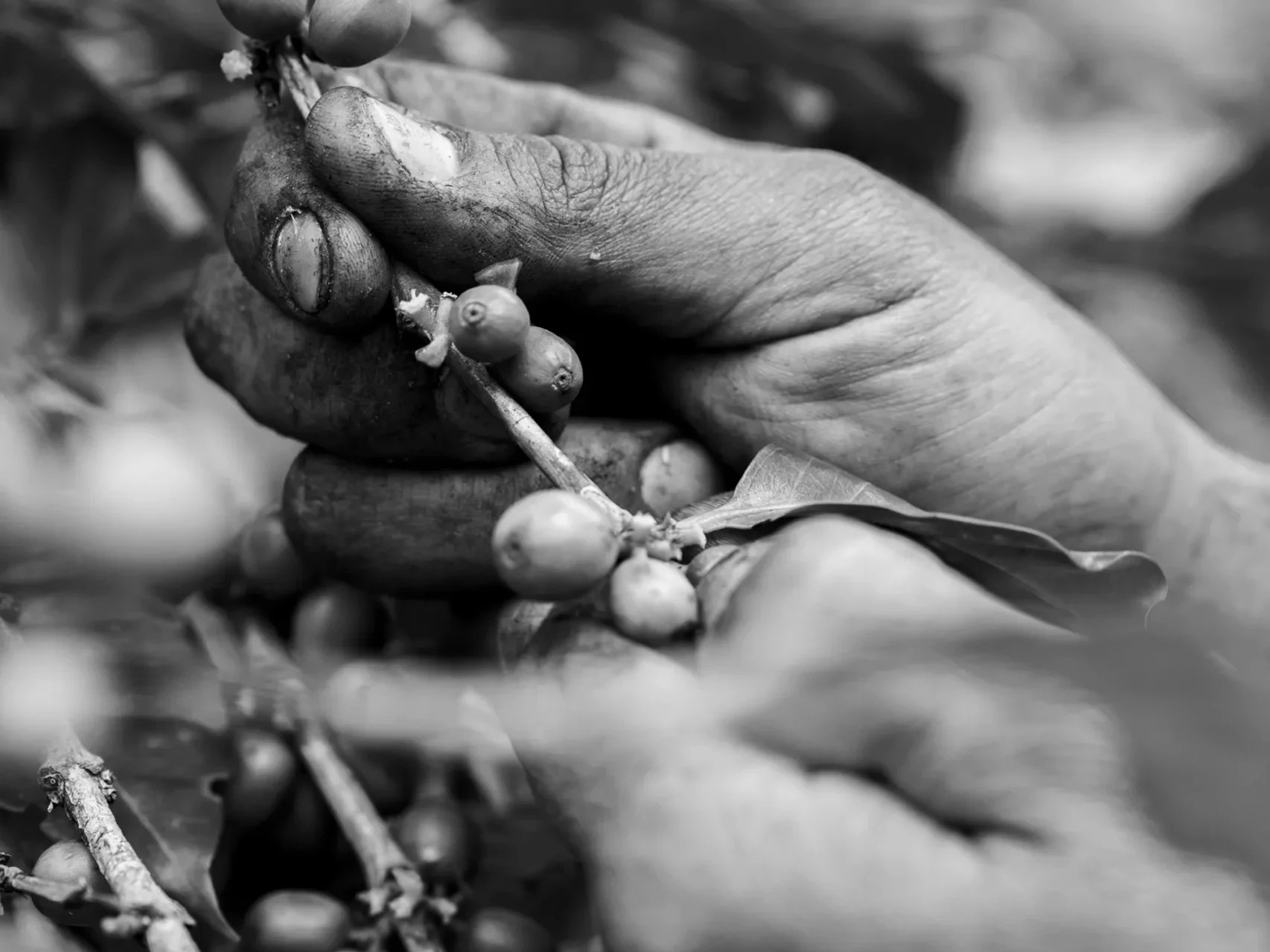
Coffee is a fruit, and the beans we grind to make our daily cups are the seeds of a cherry that grows on trees in some of the hottest parts of the world. But as global temperatures rise, so do threats to that crop, which translates into higher prices throughout the supply chain—costs that are passed down to us, the consumers. Johnson and her team at BD Imports are committed to making sure the people growing such a vital part of our daily routine get their fair share for the work they do and the traditions they’ve inherited. While she doesn’t believe we’ll see coffee go extinct in our lifetimes, the knock-on effects of climate change in some of these countries may soon reach our kitchens.
Johnson lives and works in a suburb of Atlanta, Georgia, and last summer we met in midtown Atlanta for this interview, in a meeting room at a coworking space. The neighborhood was full of newly developed, mixed-use buildings surrounded by the usual suspects: a Lululemon store, a Shake Shack, a smoothie bar—and a Starbucks. She told me that as the youngest of eight children, she used to bite her siblings a lot, earning her the nickname “Blood Dog”—hence the naming of her company BD Imports. When I mentioned that I was also a biter as a child, she laughed heartily: “Oh, I’m in good company!”
Not all conversations are as linear and succinct as they appear. This interview has been condensed and edited for clarity.—Ed.

Phyllis Johnson, seated at right, with members of the Brewing for Equity Fellowship, September 2025.
© Foto-Therapy Photography–Atlanta
Cohen: Up until a few years ago, I had no idea that there was such a thing as “natural” coffee, or what the difference was between that and “washed” coffee. Can you explain those two?
Johnson: “Washed” means that after the cherry is picked, it doesn’t just sit around. It’s soaked in a fermentation tank for a precise number of hours. Once it goes through that process, the pulp is taken off the cherry using water. In most places where coffee is grown, the water comes from the mountain or the river. After the pulp is taken off, the cherry is allowed to dry in what they call parchment, and then it’s processed. The green beans are packaged into the bags and exported.
“Natural” means the cherry comes off the tree and just sits, so the flavors from the cherry can seep into the bean itself. Later on, the dry pulp comes off. A naturally processed coffee is going to have more chocolate notes, smooth notes. A washed coffee, to me, tastes a bit brighter, almost like you can taste the light in it. It’s a bit more acidic. Even though the characteristics of coffee can vary by region, you can typically tell a washed from a natural. Which you prefer just depends on what you want to do with it.
Cohen: And what’s the “honey” process?
Johnson: That’s when they allow the parchment to sit for a longer time. It’s sort of in between washed and natural. There are so many different processes used for coffee. There are all sorts of fermentation, for example. Some producers add substrates to the fermentation tank. I’ve heard of adding wine or fruit. I think that’s cute and all, but as much as it takes to grow coffee and to get a decent price for it, I say let’s just enjoy the coffee.
The flavor profiles in coffee are related to what else is grown in those countries. If you go to a country and you eat papaya or star fruit for breakfast, and then you start tasting coffees, it’s like, “Oh, now I taste all those things.” In Ethiopia they have this little green leaf with a strong smell and taste to it, and you taste that in the coffee. As a buyer, sometimes I can’t do the coffee justice when describing what it tastes like, because it tastes like things that aren’t common in our environment.
Cohen: Can you identify where a coffee comes from based on just the taste?
Johnson: I can probably get pretty close. I used to be able to tell Kenyan coffees based on the region.
Cohen: What’s your preferred way of preparing coffee?
Johnson: I just like good-old drip coffee. A pour over is fine, but it gets cool too fast. I hate K-cups. They’re convenient, but if you do the math, you’re probably paying fifty dollars a pound for the coffee. Sometimes they put good coffee in K-cups, but the consumer is paying for all that packaging and convenience. You may think that’s cheap—just eighty-five cents a cup—but for how much coffee is in there, you paid way too much. Just buy you a bag of coffee and brew it at home.
The K-cup doesn’t give the consumer a good experience, to be honest. They’re either drinking coffee for the caffeine, not the flavor, or they don’t know how good it can be. And they’re not getting subtle flavor notes or anything like that. But I understand some people are willing to give that up for convenience. In a doctor’s office, it works. It’s just an expensive, low-quality option.
Cohen: I’ve heard a number of stories about where coffee started. What’s your understanding?
Johnson: Most of us in the industry believe that coffee started in Ethiopia. Maybe someone in Yemen, or the Turks, did something a little bit different with it, but Ethiopia is usually accepted as the birthplace of coffee. It’s one of the places I’ve traveled to most frequently, and I’ve had the opportunity to go to the countryside there. When you do that, you discover that there is something very special about coffee in that culture; you realize we’re just playing with coffee in the US.
Early on, when I would go to coffee conferences, Ethiopians would tell me I couldn’t call myself an importer and not import coffee from Ethiopia. In a lot of places where coffee is produced, the locals don’t drink much of it. That’s changing, but twenty years ago I could travel to East Kenya, which produced some of the best coffee in the world, and all I would find to drink was instant coffee, because they don’t drink coffee there. You can’t go to the grocery store and find good coffee. But when you go to Ethiopia, they drink their coffee. I’ve heard that over 99 percent of Ethiopians drink coffee. It was not created to be an export commodity. It became that, but originally it was just what Ethiopians drank. After colonization, other East African countries were forced to grow coffee. It was the same in Brazil. Coffee wasn’t a native product there, so there was no culture around it. You see the difference when you go to Ethiopia. You can go far out into the countryside, and you’ll see herdsmen with a wad of coffee in their jaw to keep the caffeine going. On a Sunday you will see this ceremony—people coming from church or going to the temple with the grass they put down on the floor and the little things they’re going to serve along with the coffee. Coffee takes on a healing property there that we don’t understand in the West. Sitting in a coffee shop drinking coffee is an echo of it, but in Ethiopia it happens at a much deeper level. It’s a medicine.
Cohen: How did cultivation of coffee change with colonization? Was Africa the first place where it was produced at a scale for export, or did that happen simultaneously on different continents?
Johnson: I’ve read books about the history of coffee, and what I’ve realized is that none of us really understand coffee pre-colonization. The books kick off at the point where coffee became an export and go on to describe how it proliferated around the world. Maybe some missionary or priest or a king’s person smuggled it into a colonized country, and then it was planted and became an export for that country, another opportunity for the colonists to bring in money. We don’t really know what the culture of drinking coffee looked like before that: How did they prepare it? What are the stories there?
When you work in the industry, you start to focus on the product itself. I’ve been in Uganda and talked to rural women there who don’t consume coffee. They don’t even know what coffee is used for, only that it’s exported. Some thought the beans were used as bullets, ammunition. Some referred to coffee as the “whipping product,” because they were beaten if they did not produce enough of it. So coffee has played a horrible role in the lives of people who were forced to grow it, either through colonization or enslavement. Even to this day, people in those places tend to receive the least amount from the sale of coffee grown in their country.
This is why we started an inclusive supply chain in Brazil focused on Black Brazilian farmers. Because if you don’t do that intentionally, then inequality persists. An American importer has every right to come to this business with the attitude of “I’m just looking for a good price,” but they could come to it with a different level of curiosity. When I take buyers to coffee-producing countries, I like to go to the universities there. When we were in Brazil a few years back, we went to two universities devoted to agricultural education, like the Federal University of Lavras. Because I saw very early on, when we would go to coffee-producing countries, that young American coffee roasters would be trying to tell these people, who have grown coffee for generations, what to do. It was just a disrespect toward the people and the knowledge they offered. Having grown up on a farm in a rural community and worked on farms that were owned by white people, I was aware that agricultural workers know a lot more than you might think they know, and respect is due to them because they’re working with the product.
So when I would see Americans try to tell third- generation coffee farmers how to pick the cherries, how to sort the cherries, and how to do the processing, that was infuriating to me. At what point does your power stop? The grower is probably thinking: I’m already getting a low price for this, and now you’re telling me that I need to be certified in order to do it, and you’re going to ask me, “Why don’t you try this or that?” And you started roasting coffee when? Three weeks ago? So I’m thankful to have worked in coffee long enough to see a new, diverse generation of people coming in who understand the respect that needs to be given to the producers—not in a sense of “I feel so bad for you, because your government is corrupt and you’re suffering here,” but rather, “You are due respect for what you do well. I’m the one here to learn.”
Cohen: By the middle of the twentieth century a lot of countries in Africa were beginning to establish some level of independence from colonial rule. I imagine that, once independence was declared, there was a rush of Western companies trying to use that existing colonial infrastructure. Was it still a type of indentured servitude for the local population, or did those exporters come in and change the infrastructure?
Johnson: In graduate school I took an economics class at the Harvard Kennedy School, and what I found interesting was that if you look at countries that were colonized, and you look at who they’re trading with today, their primary trading partners are the former colonial rulers, right? They helped to create an infrastructure that benefited the colonists, and they’ve continued to run things on those tracks. Now we’re seeing Asian companies and countries come in to help with infrastructure to soften some of the grip that the colonists had. But I would argue that many of the coffee-producing countries still operate as if they are under the rule of a colonizer. You’ve got this country that was ruled from the outside as a production mechanism for the good of other countries, right? And once they gain their freedom, things aren’t going to immediately start working out well, because now they’ve got to develop their own political systems. They’ve got to start operating as a functioning country, and many of them continue to struggle to do so. It is very difficult to operate in Africa.
Coffee has played a horrible role in the lives of people who were forced to grow it, either through colonization or enslavement. Even to this day, people in those places tend to receive the least amount from the sale of coffee grown in their country.
Cohen: The reason I ask is that, if someone alive now still refers to coffee as the “whipping plant,” it means that dynamic existed in the recent past, whether through a colonial state or a quota that a company established.
Johnson: Oh, yeah. I think Kenya gained its freedom the year I was born. I had the great pleasure a few years back of meeting a 105-year-old woman in Rwanda. Her daughter was a coffee grower who we bought from, and I had a chance to sit with her and talk about the different rulers of her country and the different names of the country and what it was like for her growing up. So, yes, that’s a recent history.
Brazil was colonized by the Portuguese, who brought Africans there and enslaved them to grow coffee. The impact of enslavement in Brazil still resonates in the coffee business today. The people who were enslaved there are used to taking care of other people. So, once they escape slavery, what do they do? They do the same thing. They’re going to be found in positions of caregiving, of servitude, for generations to come. In Brazil coffee was called black gold. The life expectancy of an African brought to Brazil to work in coffee was seven years, because it was cheaper to go back and get another one than it was to nourish them. Brazil became the top producer of coffee during enslavement, all of it produced by human labor. They supplied the world with coffee that way. So, after working in coffee for twenty years and never meeting a prominent Black Brazilian working in that world, I asked where they were, which was a very uncomfortable question for everyone.
Cohen: Brazil produces more than a third of the world’s coffee. What’s special about Brazil?
Johnson: They have a lot of land. Even though Brazil is the largest producer of coffee in the world, its portfolio of other export products is also huge. That’s one of the reasons why they became so successful. If you look at a small country like Burundi, where coffee is a much larger percentage of the GDP, it has a very poor economy, because Burundi has no control over the market price for coffee. It’s hard for a country to lift itself out of poverty while relying on one commodity. And a poor country is more likely to be in political disarray. Buyers are going to go to the countries where the government seems fairly stable. That’s why, for the US, countries like Colombia and Brazil are the biggest producers.
Cohen: You mentioned the market price. What determines that?
Johnson: The commodities market dictates the price. It looks at all types of agricultural commodities that are traded in large volumes. If you’re a huge coffee company, and you’re buying tens of millions of pounds of commodity- grade or lower-quality coffee per year, you’re buying it entirely based on the commodities market. Over the years, we’ve developed a market for specialty coffee, where you know who the producers are. But their prices are still in relationship with the commodities market. When Donald Trump’s tariffs kicked off, the commodities market kind of took a dive. And that’s unfortunate, because the producers receive less money when the market is low.
Cohen: So if US tariffs on Brazil are 50 percent, that means the price of coffee from Brazil is going to increase drastically. Will prices for coffee produced in places with lower tariffs drop?
Johnson: It depends. Let’s just say the market price is $3 per pound; then coffee from Brazil is going to be $4.50 because of the tariff. And the US importer has to pay that. So the consumers have to pay that. The importers can choose not to buy Brazilian coffee, and the Brazilian sellers can sell to another country where there are no tariffs, but if we want it, the tariff is paid on our end.
Right now I think the industry is trying to find out where the lowest tariffs are, and Africa could probably benefit from that, even though it’s a little bit more unstable, and shipments take longer, and relationships with sellers might not be as deep. And when you talk about coffee from West Africa, you talk about Robusta.
Cohen: Robusta is a lower quality?
Johnson: I think so, yeah.
Cohen: So coffee from East Africa—what is that?
Johnson: Arabica.
Cohen: So is Robusta used in gas station coffee or hotel coffee?
Johnson: It depends. Some people use a little bit of Robusta if they are doing espressos. Washed Robusta is a higher quality. They’re trying to build Robusta up because the plants are more resilient to climate change. They grow at lower altitudes. Brazil and other countries are producing more Robusta. They do drink a lot of Robusta in Europe; we’re pretty much set on Arabica coffee here.
Cohen: What did the rise of Starbucks do to the coffee market globally?
Johnson: I think it did some really wonderful things. For one, it created this idea that there’s a difference in quality. Peet’s was doing it first: Alfred Peet came to the US from the Netherlands in 1955 and brought his love of coffee, his knowledge of roasting coffee, to California. He opened the first Peet’s in Berkeley in 1966. The founders of Starbucks learned from him and took the model to Seattle.
The impact of Starbucks on the coffee industry has been huge. They’ve come under a lot of fire, but no one was opening cafes like they were. They created something that people wanted and made people curious about coffee. You’ve got to give them credit for that. Because they are consumer facing, Starbucks is an easy target for criticism. Years ago they stepped into talking about race, and they got in trouble for that. They’ve tried to be at the forefront of social issues, and that has backfired on them.
Cohen: What about their relationships with coffee producers?
Johnson: They do have programs that help uplift producers. I don’t know if they still do this, but years ago they would feature a special coffee from a producer, and the farm would get tens of thousands of dollars. They have a lot of sustainability programs for producers.
As far as how they work with producers: They are a publicly traded company. Their goal is to keep their stock price going up and keep shareholders happy. To meet those goals, they are going to put profitability over investing in what’s best for sustainability of producers or environment. That’s why it’s so important to have small companies too. What worries me about where we are right now in the coffee industry is that tariffs, climate change, and other challenges will crush small- and medium-sized businesses, who are the ones igniting the change in the coffee industry today. Smaller companies can develop programs with small-scale producers that are outside of the scope or watch of large corporations, and they can talk about things the bigger companies can’t. And if we get back to having only large companies, then we lose ground on all that good work.
Cohen: Are you talking about importers?
Johnson: I’m talking about the entire supply chain. There’s a place for everyone in the industry. We need the big companies like Starbucks. We need the small companies like Little Waves [a roaster in Durham, North Carolina, whose owner introduced us to Johnson.—Ed.]. We need small importers, like my company. We need large multinational importers. When more pressure is put into the overall system, especially financial pressure, then the smaller companies are going to fall by the wayside.
Small companies don’t have the cash flow to write a check for twenty grand to pay tariffs on every container they have coming in from Brazil. Even if that cost can be passed down to consumers, it’s a hardship. Larger companies can pay the tariffs long enough to where maybe something will change, but by then the smaller companies will be gone—and so will the creativity and everything else that they bring.
Cohen: How long has America been the top consumer of coffee in the world?
Johnson: I don’t know, but I know we are number one based on value, on how much we spend on coffee. We used to be number one based on both value and volume, but Brazil is moving up. We have a larger population, but only about 66 percent of Americans consume coffee every day. In Ethiopia they have a much higher consumption rate but a much smaller population.
Cohen: How has climate change affected coffee farmers?
Johnson: Producers knew, long before we were willing to accept the reality of climate change, that things were changing. When I first started working in coffee, you’d go to a farm at a certain time of year and see the process at a certain stage: The trees were blooming, or the cherries were coming out, or the cherries were green and turning red. Now the coffee is ripening sooner, or later. They’re seeing lower yields. The coffee trees are producing less. The density of the beans is changing: You used to be able to fill a container and know exactly what that would weigh in pounds. That number is less now, because of less rain or something to that effect.
Typically in agriculture, there are some years where you have a smaller crop and others where you have a bumper crop. The bumper years have just not been coming, all over the world. Instead it’s 20 percent lower, or 30 percent lower, than the year before. The agronomists look at the trees to determine what the expectations are going to be for the next season, and they’re all predicting less because of climate change. Meanwhile the producers still have kids to send to school, they still have bills, they still need to invest in their farm. So that means they have to raise their prices.

Cohen: Does a coffee tree have one harvest season, or can it produce multiple times a year?
Johnson: Kenya and maybe a few other countries have two harvests per year, but most have just one.
Cohen: Are there diseases that affect coffee trees?
Johnson: There are quite a few well-known diseases that impact coffee. The coffee-rust disease is known for killing off trees. There’s a bug that bores its hole into the green beans to lay eggs. Sometimes when you store green coffee, you might see little bugs flying around because the eggs have hatched. Most containers coming to the US have to be fumigated to make sure you’ve gotten rid of any pests. I think there’s a law that you cannot take green coffee to Hawaii because of the risk of infecting the coffee crop there. Infections can impact the taste too.
Cohen: In some of these regions that are experiencing lower yields, is it possible to transplant trees from a different region?
Johnson: A few growers have done that, especially wanting to take trees from Ethiopia directly. And it’s amazing what soil in one country can do to a certain plant versus what soil in a different country does. That’s the thing about coffee: It’s just a never-ending puzzle to figure out. There are so many things you can try—with the plant, the brew, the people, the issues, all of it.
Cohen: When did the notion of “fair trade” arise in the coffee industry?
Johnson: Before I started. I remember working with the fair-trade people early on, and they’ve been controversial from time to time. It used to be that you said, “Fair trade,” and the conversation was over.
Cohen: Why would the conversation be over?
Johnson: Because as Americans we don’t want to think very much about where a product comes from. If there’s a seal that says, “Fair Trade,” then it’s OK. Fair means fair—how much clearer could it be? But what does it take to be fair trade? How does this organization function? There are two governing bodies: Fair Trade International and Fair Trade USA. Most consumers may not understand the difference between them or how they work, or what their guidelines are. Is it enough for the consumer to believe that the producers are engaged in fair practices? Maybe so, but it can be hard to understand the programs themselves. I can’t say that I fully understand them, and we currently do not purchase fair-trade coffees.
I think the fair-trade movement gave us some transparency into what farmers are paid. So that was a good thing. But even when I was first coming into coffee, I felt like fair trade was a cop-out. As an importer, I was studying everything there was to know about the origins of the beans, and I quickly understood that you can’t put all your trust in a seal. That’s our desire to minimize the complexity of life, to want to check for a seal and then go about our lives. Not to say that everybody should research everything that goes on in the world, but it’s naive to think that a seal is all there is to it.
When my family lived in Illinois, I used to sell a roasted brand to a local grocery store, and sometimes I would be doing an in-store tasting and shoppers would come up and ask, “Is it fair trade?” and I would say, “No,” and they would just walk off, which made me crack up. I was the importer of the product, I knew the producer, and I knew that I paid them more than what fair trade required. But these customers knew nothing but the fair-trade label.
There are concerns that go so far beyond fair trade. Are you trading with the wealthy farmers who can afford to be fair-trade certified? Or are you buying coffee from the women farmers or the Black producers or the Indigenous people who are first-generation farm owners, because they come from a history of enslavement? Oftentimes the people who can obtain the label that appeals to you are already in a position of privilege. So you’re increasing inequality, even when you think you’re doing something positive.
Many of the coffee-producing countries still operate as if they are under the rule of a colonizer. You’ve got this country that was ruled from the outside as a production mechanism for the good of other countries, right? And once they gain their freedom, things aren’t going to immediately start working out well, because now they’ve got to develop their own political systems.
Cohen: “Fair trade” seems like a marketing tool, like “free range.” Is there even an accepted certification of what it takes to be fair trade?
Johnson: It’s changed over the years, but it’s based on price, which has to be a certain percentage over whatever the market price is. The fair-trade label has a place: If I check into a hotel and go to make myself a cup of coffee and see that it’s fair trade, then I know the people behind it have been paid. I get that it’s easier to tell that with one seal. But as someone who has actually done work on the ground and seen the disparities, I know fairness can be determined by a network of things that the consumer can never really track down. For me, if you were a coffee importer and told me you had a relationship with the people who grew it, that would be just as good as a fair-trade label. You’re not going to treat someone poorly if you have a relationship with them, if you’ve visited them, if you understand their situation.
Cohen: Suppose I’m a grower: What would I need to do to be certified fair trade?
Johnson: You would have to be a fair-trade cooperative or a fair-trade farmer. You would have to abide by a certain set of economic and social guidelines to get a fair-trade premium on the sale price. You might get $5.50 per pound instead of $5.
Cohen: Is certification based on my practices or the way that I grow?
Johnson: A lot of it is paperwork: You have to keep track of data to sell at a higher price. From what I understand, not all fair-trade-certified coffee produced is sold as fair trade, because there’s not a large enough market for it. So then you’ve got this coffee that has undergone fair-trade certification, but some of it is sold outside of the fair-trade market, maybe even at a decent price.
Fair trade isn’t a bad thing. It’s just a governing body that offers some level of transparency, some level of putting back into the community. But you have to understand that not everybody can be certified.
Cohen: Does the importer have to be part of this fair-trade network, too, or can anyone buy fair-trade coffee?
Johnson: If it’s going to be labeled fair trade on the store shelf, everybody’s got to have the certification, from the growers, to the importers, to the roasters.
Cohen: I wonder if you could trace the hypothetical journey of the beans that make the coffee I might get at a gas station, versus the beans at a high-end coffee shop. How do those different paths affect the people growing and roasting those beans?
Johnson: If you’re getting a competitively priced cup of coffee in a quick-serve environment, the company that roasted the beans is probably going to be a large company with industrial roasting equipment that can roast hundreds of pounds of coffee in one batch.
Cohen: How much are the people working for the roaster getting paid?
Johnson: If they are US based, they’re probably getting a livable wage, making enough to feed their families. It’s an assembly-line job working with highly specialized equipment.
That coffee will then likely go through a separate distribution company that serves the retailer—in this case a gas station.
Cohen: Is it safe to say that the roaster and distributor are also serving other retail clients like hotels, McDonald’s, grocery stores?
Johnson: Yes, and possibly airlines. Meanwhile, the high-end coffee shop may be getting their coffee from a local roaster, and that roaster has probably visited the farm where the beans were grown. They know the whole story of the coffee, not just that it’s from Colombia or Brazil or Kenya or Ethiopia. They know the names of the beans. They have photos. They paid the farmer a much higher price than the big retail roasters, who stick close to the commodity price.
As far as quality goes, the retail beans may not be well sorted after they come off the tree. A batch might have a lot of green beans in it. The specialty product, on the other hand, might only be red cherries, and they will be processed in small lots; they may sell a five-bag lot. The retail coffee may be part of a ten-thousand-bag lot. So you’re talking about two totally different products and two totally different industries.
Cohen: And the coffee that’s picked for retail would be from an enormous farm and perhaps picked not by hand but by machine?
Johnson: Yeah, the coffee at the gas station might be picked by machine. It might be part of a blend of various beans in order to hit a certain flavor profile. The specialty shop might have their coffee listed as a single origin, so it’s more carefully selected.
Cohen: Do you have a rough idea of what the margin is like for each farmer?
Johnson: Let’s say the retail farmer owns five thousand acres, and their harvest is mechanized. The specialty coffee farmer owns five acres. The specialty farmer needs to charge more per pound for their coffee, whereas the retail farmer can afford to make less per pound because of the cost savings when you produce that amount. And that’s why Brazilian coffee is so attractive to the US: They have a lot of big farms with low cost of production, while another country might have high production costs because its farms are smaller and its farming practices are labor-intensive. It’s a challenge to be a small farmer in Brazil who’s trying to sell high-end coffee, because if you tell the buyer, “I have this specialty Brazilian coffee,” the buyer might say, “Well, I’m already buying ten containers of Brazilian coffee at $1.25 a pound.” So that small producer has to be able to find a small buyer who is looking for something special. All the Black farmers I work with in Brazil are small specialty growers.
Cohen: Is that a legacy of colonialism?
Johnson: Yes, of enslavement. I know of no Black Brazilian exporters who operate large retail farms.
Race in Brazil is quite different than it is in the US. It’s taboo to talk about race there. On one of my first trips there, I was sitting around a table with about fifteen people, and they were telling me their stories about coffee. And my host, knowing I was concerned with racial equity, had said to me, “We’re not here to talk about race.” There was one Black family there, with three or four members, and when we got to them, they would say, “I’m a coffee picker, and my grandmother taught me how to do this.” The difference in ownership versus workers was clear and squarely connected to race.
In 2020 I started the Coffee Coalition for Racial Equity. It’s a nonprofit organization based here in Georgia, and its mission is to see diversity in every aspect of coffee, not just in production or food service, but in the trade, in green coffee, in roasting, in parts of the process I’m still learning about. We are in our fifth year, and we’re launching a ten-month leadership-development program for selected individuals to learn more about coffee. They are folks who have already started a career in coffee, but we are working to give them the best chance of longevity in the industry. It’s something that I’m happy to end my coffee career with—looking forward to the next generation.
When I first started working in coffee, you’d go to a farm at a certain time of year and see the process at a certain stage: The trees were blooming, or the cherries were coming out, or the cherries were green and turning red. Now the coffee is ripening sooner, or later. They’re seeing lower yields. The coffee trees are producing less.
Cohen: How many people does that program involve?
Johnson: There are going to be five people in our first cohort of the leadership program. The Coffee Coalition for Racial Equity has a board of about eight or nine. Our supporters have been individuals, one of my mentors, Starbucks, Peet’s, small coffee companies—all sorts throughout the industry who embrace change and are not threatened by it. There are so many challenges, because oftentimes when you’re working with people in developing countries, you’re engaging with different cultures. We need more people from different backgrounds to tackle the problems and come up with solutions. We need more creativity, and that’s what I’m excited to be offering to the industry.
Cohen: What do you think we can expect in the next twenty to thirty years, with the changing climate in places that are producing coffee? Do you think that in our lifetime, we will see some of these regions begin to cease production?
Johnson: I don’t think in our lifetime we will see coffee go away. It is an addictive product, so there’s that. I think we’ll see coffee become more valuable because consumption is going up in different parts of the world. I believe it will become harder for us to get our hands on coffees from those regions, and we will have to pay more because there will be less coffee. We will need to change our habits as consumers.
If you look at some of the coffee-producing countries, there’s been an effort to increase local consumption in many of them, and it’s growing. East Africans are drinking coffee. We used to think there wasn’t enough of a middle class in some of these developing countries for them to drink coffee; they would always just produce it and sell it to us. Well, as those economies start to grow, they will take more interest and will purchase their own coffee and develop a greater appreciation for coffee. It’s a product that grows in their country, and they grew up around it. Maybe their grandmother used to grow it. And now they can go into this shop and drink it, and they can actually get coffee from their own region, unlike us, so there’s a stronger connection to the product. That internal demand is going to lessen the volume we purchase. Climate change will lessen our volume, and our current trade situation is going to lessen our volume, and I’m sure other factors will come up as well.
Cohen: Could we grow coffee in the US?
Johnson: The only US state that can grow coffee is Hawaii, which makes Kona coffee, and it’s expensive, because it’s grown in the US and there’s not a heck of a lot of it. It’s a beautiful coffee, but there are other beautiful coffees around the world that you can get for less. Hawaii can’t produce enough for all of us to drink.
Cohen: At some point could our climate change enough to create the conditions to grow coffee in the southern states?
Johnson: No, it only grows within roughly 1,700 miles of the equator, in a zone called the Bean Belt. I’ve always said, even when prices were low, we have a disadvantage in the market, because we can’t grow it. Producers have the upper hand. This is a product we’re addicted to, and we have to rely on somebody else for it. If growers can create a market for it in their own country, they have an even greater advantage. That’s our main competition: local consumption and demand. Mexico has one of the highest rates of local consumption. Something like 60 percent of Mexicans drink coffee, and they drink their own homegrown coffee in beautiful cafés on the side of the road and in shopping centers where people hang out. The more coffee they drink, the less there will be for us.
When I was a teenager, I flew from North Carolina to Seattle, Washington, with my grandparents to visit one of my uncles. The Pacific Northwest might as well have been a different planet, with its Douglas fir trees, mild summer weather, and snow-capped mountains looming in the distance. But perhaps the most revelatory part of the trip was when my uncle took me to a place called Starbucks and ordered me a concoction of coffee and milk that blew my mind. Up until that point, coffee to me was something that grown-ups drank—a foul-smelling liquid that for some reason they needed first thing in the morning. But the flavors I was tasting in Seattle were deep and unexpected, and then there were the obvious benefits of combining caffeine with sugar. Why don’t we have these back home? I thought.
That was in 1991. Clearly I had no inkling of what was to come. But that latte set me on a path I’ve followed ever since, chasing the same surprise and wonder. (One could argue it’s also the behavior of an addict, since caffeine is involved.) I’ve worked at a coffee shop and experimented with multiple brewing methods: basic drip, French press, pour over, and Aero Press. I travel with my own hand grinder, beans, and kettle. I’ve taken a sip of gas station drip brew and immediately thrown it out. I am a hopeless coffee snob. Until a few years ago, however, I hadn’t spent a lot of time thinking about what it takes for those beans to get into my cup, and who benefits.
Phyllis Johnson grew up far from Seattle, on a small farm in central Arkansas, but as an adult with a career in microbiology she started asking similar questions about coffee, and the lessons of her childhood informed that curiosity. In 1999 Johnson was traveling around the country selling specialty chemicals when she saw a huge bag of green, unroasted coffee beans in a customer’s place of business. She remembers thinking: Why is this sight so foreign to me as a person who lives in a country where we consume coffee at a high level? It opened a door that eventually led to her becoming a coffee importer. For several years she carried two suitcases around—one for her day job in chemical sales, and one for when she visited roasters at the end of the day. Eventually she turned her small company, BD Imports, into a full-time job, joined by her husband.
https://www.thesunmagazine.org/articles/601-crop-to-cup