
The Legacy of Women's Leadership; 22nd Annual African Fine Coffees Association Conference
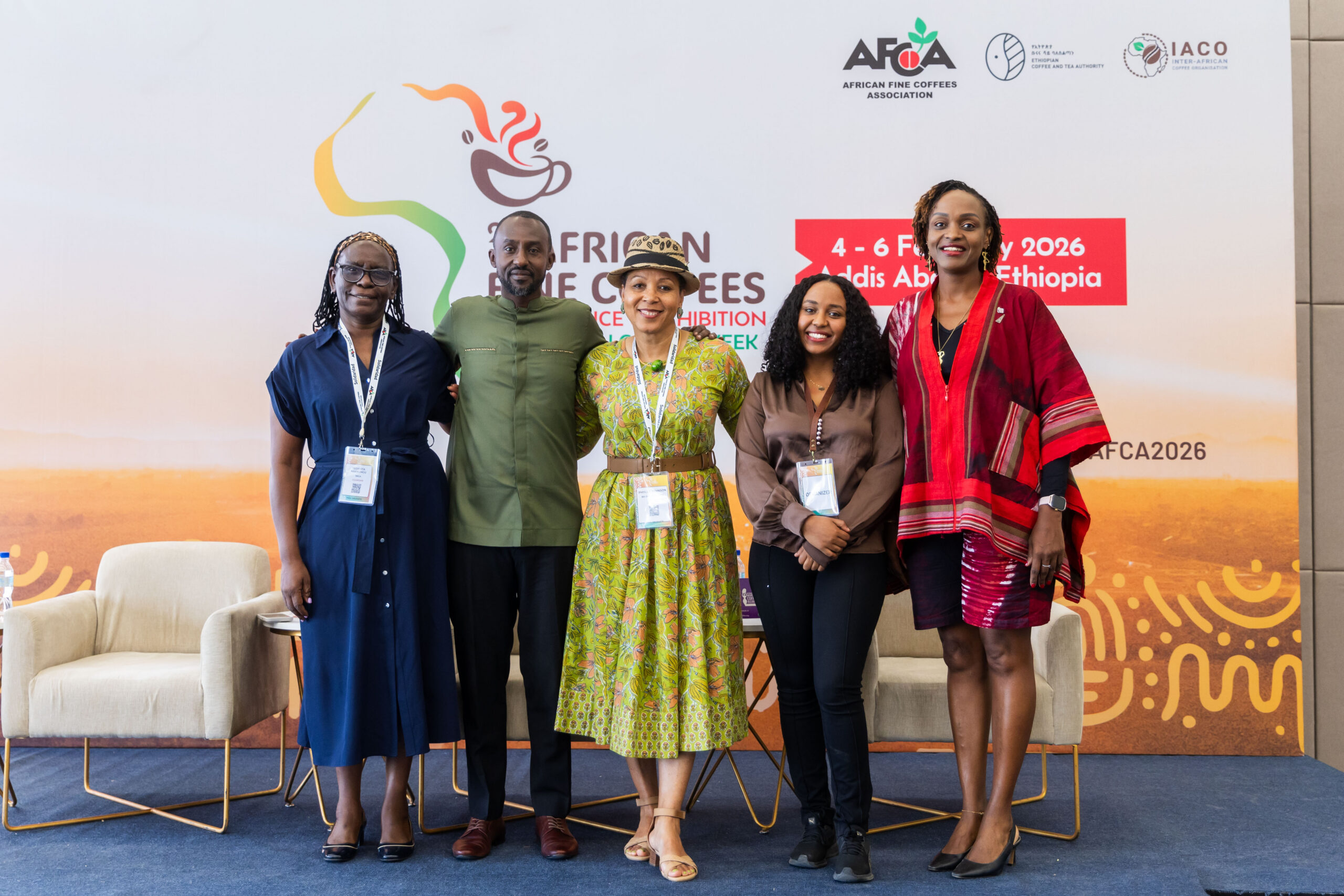
Phyllis Johnson, BD Imports founder and President speaks at the International Women's Coffee Alliance breakfast held during the African Fine Coffees Association Conference, Addis, Ababa, Ethiopia in February 6, 2026. In 2009 she led the formation of the chapters in east Africa and back to share insights.
In the vibrant heart of Ethiopia, the 22nd Annual African Fine Coffees Association (AFCA) Conference served as a powerful backdrop for the evolution of the industry. Amidst the aromatic bustle of Addis Ababa, a pivotal moment unfolded during the International Women’s Coffee Alliance (IWCA) breakfast, where a distinguished panel gathered to address the theme: Shaping Women’s Leadership for the Next Generation of Coffee.
A Legacy of Leadership
The discussion was anchored by a speaker who had been instrumental in the very architecture of the movement, having led the foundation of numerous IWCA chapters across East Africa. For her, the session was less of a formal presentation and more of a homecoming—a chance to witness the tangible progression of the seeds planted years prior.
The panel featured a powerhouse of industry influence, including:
- Phyllis Johnson: President of BD Imports and Founder of the Coffee Coalition for Racial Equity
- Gilbert Gatali: CEO of the African Fine Coffees Association
- Mbula Musau: Representing Utake Coffee and the IWCA Global Board
- Beamlak Melesse Bekele: AFCA Consultant and President of Ethiopia Women in Coffee
- Teopista Nakkungu: IWCA Global in charge of Africa and Middle East – Served as moderator
- From Mentorship to “Scholarship”While the dialogue celebrated past successes, the focus remained fixed on the horizon. The panelists challenged the audience to move beyond traditional networking. A recurring theme was the transition from mentorship to what the group termed “scholarship.” The consensus was clear: guidance alone is no longer enough to bridge the systemic gaps in the coffee supply chain. To truly shape the next generation, established leaders must:
- Provide Financial Scaffolding: Moving beyond advice to offer direct financial support and resources for emerging women entrepreneurs.
- Institutionalize Opportunity: Creating formal pathways that allow young women to access the same global stages their predecessors fought to build.
- Ensure Radical Inclusion: Leveraging the influence of organizations like the IWCA to ensure that leadership reflects the diversity of the hands that pick, roast, and trade the beans.

Building a More Equitable Coffee Industry
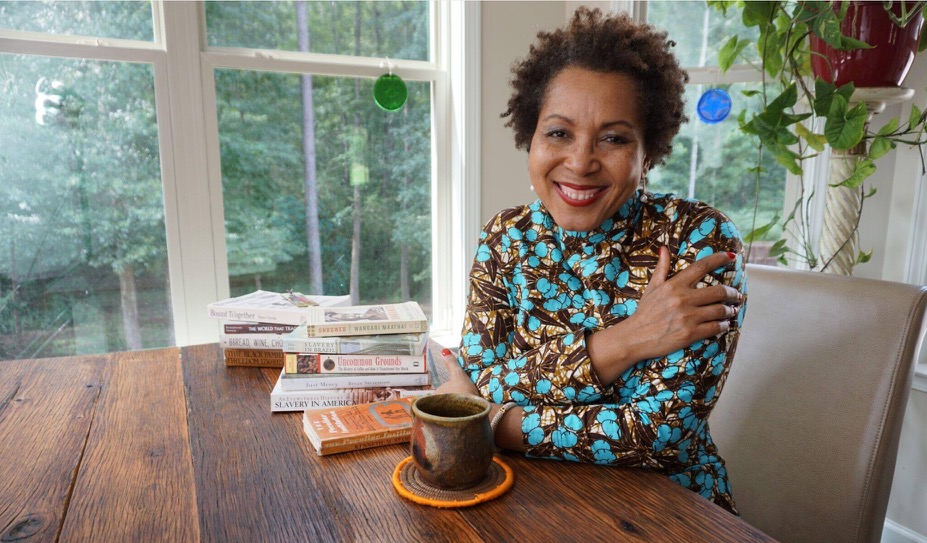
Entrepreneur, author and activist Phyllis Johnson founded green coffee trader BD Imports in 1999 with the aim of empowering women in coffee growing communities. In 2020 she founded the Coffee Coalition for Racial Equity against the backdrop of significant racial injustice and unrest in the US. She speaks to 5THWAVE about her remarkable journey in coffee and why diversity is the industry’s greatest untapped resource
Article for 5th Wave
05/05/2022
Tell us about your vision for founding BD imports in 1999
Our vision at BD Imports was to build a company that held to a social mission of ensuring relationships of fairness and opportunity. Our goal was to provide opportunities to those who were often overlooked or discounted. I saw myself in those individuals who we were engaged with in our supply chain. When provided with an opportunity, those who are often overlooked rise to the occasion in more meaningful ways – offering great value. We were out to prove what we knew to be true from our own personal life experiences and we were successful.
What have been some of BD Imports’ key achievements in this time?
I’m proud of the success of BD Imports. It’s a company that has served as a pathway for new discoveries and enlightenments, not just for myself and my family but for many others. BD Imports is often the first company to engage with women coffee entrepreneurs and producers in various countries or to inspire entrepreneurs in our own country.
Sometimes the best thing that one can be is a good representation or inspiration for others. As a Black woman in the green coffee trade, I’ve stood out and been noticed by others who also stood out in their own way.

Coffee Futures: Phyllis Johnson Champions The Coffee Industry's Way Forward
Black Brazilians were at the forefront of coffee production almost 300 years ago, an enslaved labor force then, yet today relegated to production and invisibility in prominent roles.
By Nneka M. Okona for Imbibe Magazine
12/07/2022
Atlanta Georgia, U.S. November 9, 2020 Had the journey started with sharecropping, it may have been shorter and possibly easier to move into landownership and one day compete in the high-end specialty coffee industry, but it started well before that. It’s common knowledge that enslavement went hand in hand with agriculture production throughout the Americas encompassing crops such as cotton, sugar, and yes coffee. It started with generations of enslavement in production, followed by generations of sharecropping, and finally for a few, landownership. A step further would be producing top quality specialty coffees and finding a global market. Phyllis Johnson’s new book, The Triumph, Black Brazilians in Coffee, highlights families who are finding new pathways.
In Johnson’s 20 years of working as a green coffee importer she noticed the absence of prominent Black Brazilians in the trade. Relationships established through the International Women’s Coffee Alliance Brazil chapter gave way for Johnson to learn more about the status of Black Brazilians in the industry. Visits to Brazil and meetings with the farmers allowed Johnson a chance to understand some of the challenges. Few Black families owned coffee farms, and many worked in the fields throughout generations as sharecroppers or employees. The lack of cashflow keeps farmers from being able to sell into the international market therefore, their coffees are sold at lower price levels locally. “My hope is that this book will not only enlighten but also challenge the global coffee trade to consider more inclusive supply partners.” Says Johnson
After meeting Miriam Aguiar of Fazenda Cachoeria, a Brazilian organic farmer, both Johnson and Aguiar decided to join forces and explore opportunities. Aguiar didn’t have to look far, she’d heard about a Black family that owned a coffee farm not far from her family’s plantation. On a trip to the country in 2015 both Johnson and Aguiar visited the family together for the first time.
“If Black growers are recognized internationally for their work, our local market will grow stronger.” says Aguiar. The families highlighted in the book are first generation landowners, producing specialty grade coffees. Their dreams of one day selling into the international specialty market becomes a reality. Their stories don’t end with the book. Johnson and Aguiar engaged as business partners in teaching about quality production to purchasing coffees from the families due to arrive in the U.S. in late December this year. The coffees are being marketed as the, 132 Collection. Over time they hope to add more producers to the program.
The proceeds from the sale of the book will be split between the famers and Coffee Coalition for Racial Equity, a newly formed U.S. based organization founded by Johnson to improve racial equity in the U.S.
“Our families are pleased to share our stories, it’s our pleasure to give back to an organization that supports racial equity, we feel proud to be involved.” Says, Neide Peixoto from Tradição Peixoto